How I reduced AI voice latency to sub-500ms
A case study in tuning a LiveKit Agents pipeline: the latency budget, turn detection, preemptive generation, and the benchmarks before and after.
On a phone call, there is no loading spinner.
Most voice AI demos feel impressive for the first thirty seconds. Then the delays start to stand out. You ask a question, the model pauses, the silence stretches just long enough to feel unnatural. Callers start talking over the agent, interruptions misfire, and the conversation loses its rhythm.
That was exactly where we were. Our initial latency averaged 1.4–2.1 seconds from "caller stops speaking" to "agent audio begins." Technically acceptable. Conversationally terrible.
Getting it sub-500ms wasn't one big fix. It was several weeks of tuning every stage of the pipeline — and a series of small refusals to wait.
The stack
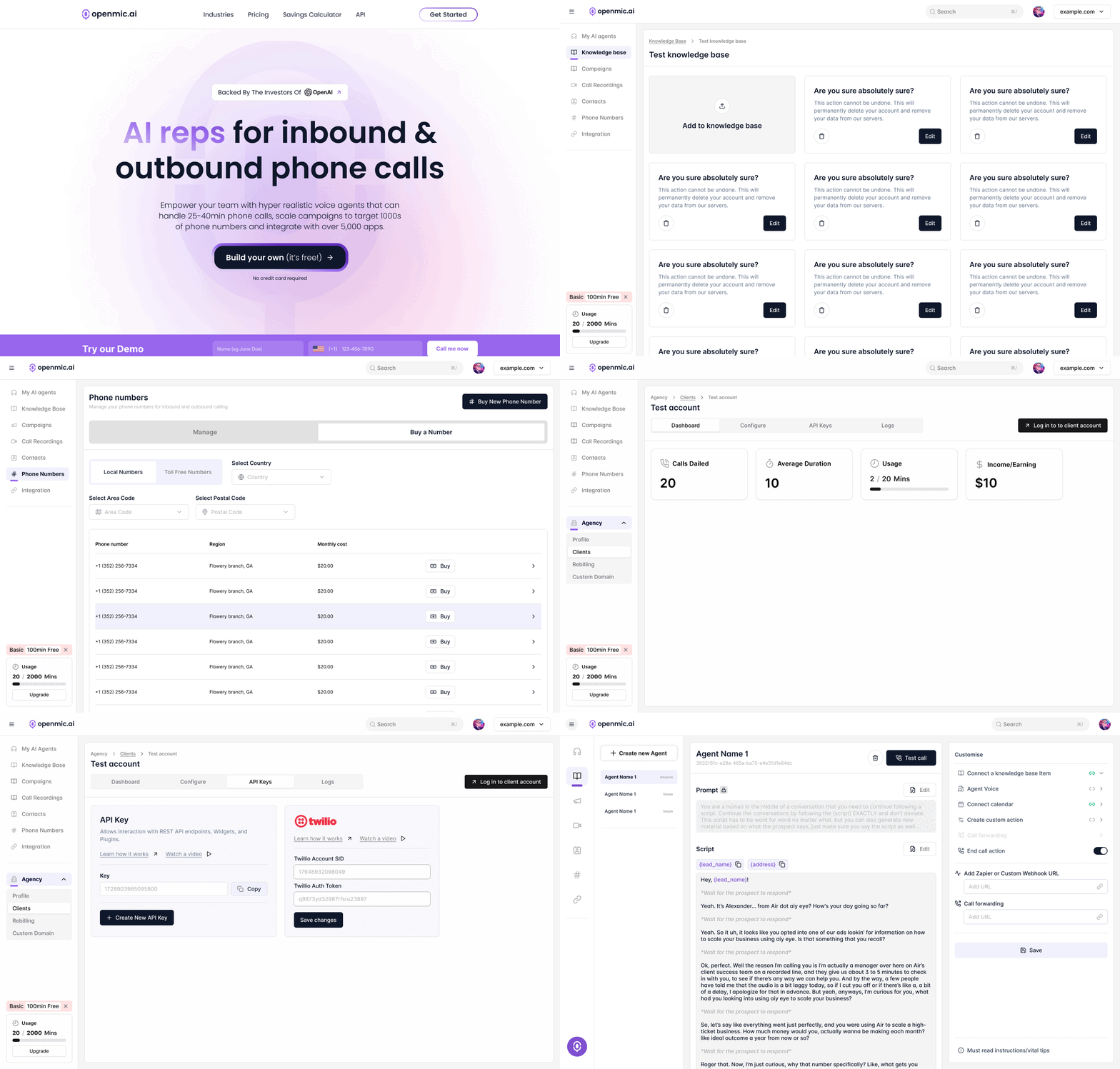
Calls arrive over SIP from telephony carriers (Twilio, Plivo, Jambonz) and land in a LiveKit room. A Python agent built on LiveKit Agents orchestrates a streaming STT → LLM → TTS pipeline — what LiveKit calls the cascaded pipeline architecture — deployed on LiveKit Cloud:
The problem wasn't any single component. It was the accumulated delay across every stage.
The latency budget
Profiling with LiveKit Cloud's observability traces, the time was distributed roughly like this:
| Stage | Initial latency |
|---|---|
| User endpoint detection | 600–900ms |
| STT finalization | 250–400ms |
| LLM first token | 200–500ms |
| TTS startup | 200–350ms |
| Playback buffering | 100–200ms |
The biggest surprise: endpointing. The model was never the primary bottleneck — the agent simply waited too long before deciding the caller had finished speaking. That one insight reshaped the whole optimization strategy.
Profile the silence
If you only trace your services, this delay is invisible — it lives between the caller's last word and your first byte of processing. It was our largest single line item, and we almost blamed the LLM for it.
Turn detection: the biggest single win
Default turn-taking settings are conservative, because interrupting a human mid-sentence feels worse than replying slowly. But for realtime conversation you have to bias toward responsiveness. LiveKit Agents exposes fine-grained turn handling controls, and we changed most of them:
- lowered the minimum endpointing delay
- enabled adaptive interruption handling, so aggressive endpointing doesn't turn into accidental cutoffs
- tuned interruption duration thresholds
- enabled noise isolation ahead of detection
This alone cut roughly 400ms from median response time — more than any model or provider change we made.
Streaming everything, for real this time
Every provider we used already "supported streaming." It didn't matter: one blocking operation anywhere destroys responsiveness. Auditing the pipeline, we found and removed synchronous transcript waits, a non-streaming TTS fallback path, delayed playback queues, and blocking tool execution.
The rule that emerged: the moment the LLM emits useful tokens, audio generation starts. Callers judge responsiveness by time to first syllable, not time to completed sentence.
Preemptive generation: paying compute for milliseconds
The most debated change internally: letting the LLM start generating before the caller's turn is fully confirmed, and in selected flows starting TTS preemptively too.
The trade
Preemptive generation buys latency with wasted compute: when the caller keeps talking, the speculative response is cancelled and discarded. Higher cancellation rates, slightly higher inference cost. For us, the conversational quality was worth every discarded token.
Clean audio is fast audio
An unexpected finding: bad audio increases latency, not just transcription errors. Background noise delays endpoint detection, misfires interruptions, and destabilizes transcripts. Enabling noise cancellation before audio reaches STT barely moved the median, but it noticeably tightened tail latency — conversations became predictable.
The numbers
| Metric | Before | After |
|---|---|---|
| Median response latency | 1.7s | 420ms |
| P95 latency | 2.8s | 780ms |
| Endpointing delay | ~700ms | ~220ms |
| Interruption success rate | ~60% | ~92% |
The metric I care most about isn't in the table: the agent stopped feeling like a system waiting for its turn, and started feeling like a participant.
Why we stayed with the cascaded pipeline
We evaluated realtime speech-to-speech models and deliberately kept STT → LLM → TTS. Production pulled us that way: reliable tool calling, auditable transcripts, deterministic speech output, per-stage observability, and the freedom to swap any provider independently. Speech-to-speech is magical in a demo; the cascaded pipeline is operable at 2am.
What actually got faster
Here's the part that stays with me. When we hit sub-500ms, I went back through the changelog — no rewritten algorithms, no faster models. Nearly all of the latency was waiting: for silence thresholds to expire, for transcripts to finalize, for turns to be confirmed, for buffers to flush.
Most slowness — in pipelines and in projects — isn't the work being slow. It's things sitting in queues, waiting for a "done" signal they never needed.
The fastest model in the world still feels slow if your agent waits 800ms to decide you've stopped talking.